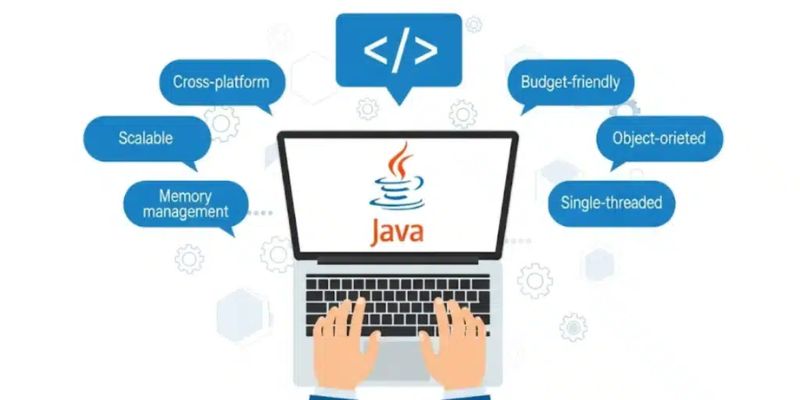
Developers frequently dive right into frameworks like Spring Framework or Hibernate without fully understanding the basics in today’s rapidly changing digital environment. Nonetheless, Core Java continues to be the foundation of contemporary web programming. Strong Core Java fundamentals like object-oriented programming, exception handling, collections, and multithreading are essential to any enterprise-grade Java online applications.
Writing cleaner code, debugging more quickly, and creating more scalable systems are all made possible by having a thorough understanding of Core Java. Concepts outlined in Core Java are used in Java-based web technologies, including Java Servlets and JavaServer Pages. FITA Academy delivers comprehensive Core Java training to help learners establish strong careers in software development. With the help of this blog, you can improve your foundation, create dependable, high-performing systems that grow with your company’s demands, and use Core Java in web apps.
1. Understanding the Role of Core Java in Web Architecture
Web applications built with Java are powered by Core Java. In a typical web architecture, a browser sends a request to a server. Which processes it and then answers. Principles are used in the writing of the logic that manages this processing.
Java classes, for instance, manage exceptions, connect to the database, validate credentials, and produce answers when a user submits a login form. It gets challenging to manage this flow if you don’t grasp classes, objects, methods, and access modifiers.
Modular programming is also supported by Core Java. Keep the display, logic, and data layers neatly separated by grouping business logic into reusable classes and packages. When your application grows, this methodical approach facilitates scaling and enhances maintainability. A solid grasp of architecture guarantees that your web apps will always be adaptable, safe, and simple to upgrade.
2. Mastering OOP and Core Concepts for Web Development
Java web applications are built on the foundation of object-oriented programming, or OOP. Designing reusable and maintainable systems is made easier by ideas like abstraction, polymorphism, inheritance, and encapsulation. Sensitive information is protected via encapsulation, which limits direct access. Aids in protecting user data in web apps. Strengthen your programming fundamentals with Core Java Training in Chennai, delivering practical, career-focused instruction in OOP concepts, multithreading, database connectivity, and real-time application development scenarios. By extending current functionality, inheritance helps you cut down on unnecessary code. Because polymorphism permits dynamic method behavior, it improves flexibility.
The framework of collections is similarly significant. Lists, sets, and maps facilitate effective management of user inputs, session data, and application-level caching. Reliability is increased by exception management. Appropriate try-catch blocks guarantee seamless user experiences by preventing runtime crashes. Additionally, multithreading is essential. Web servers manage several user requests at once. Knowing thread safety and synchronization will guarantee that your application runs reliably even when there is a lot of traffic.
3. Building Dynamic Web Applications with Servlets and JSP
Understanding how Servlets and JSP interact is essential for web developers using Core Java. Servlet processes HTTP requests and produces answers to manage server-side logic. Server Pages embeds Java inside HTML, simplifying the display layer. Request-response cycles, session monitoring, and input validation are all handled by servlets. Within these Servlets, business logic is processed by core Java classes. Conversely, JSP concentrates on showing users dynamic content.
Effective concern separation is achieved by combining powerful Core Java logic with Servlets. Debugging is made easier and maintainability is enhanced by this separation. Developers may greatly minimize server load and maximize performance by knowing how Java manages request lifecycles.
4. Managing Database Connectivity with JDBC
The core of any online application is database interaction. Java connects programs to relational databases using JDBC. Can manage connections, run queries, and handle transactions more effectively if you have a solid understanding of Java. Avoid memory leaks, always properly end database connections. Increase security and prevent SQL injection, use prepared statements. Keep data consistent, properly manage transactions.
Enterprise systems perform better when connections are pooled. Pooled connections lower overhead and boost speed rather than establishing new connections for each request. As Core Java Training Institute in Chennai focuses on practical programming and application development skills, including object-oriented concepts, exception handling, multithreading, database connectivity, and building real-time software applications. Web apps will be scalable, safe, and stable even with heavy traffic if you understand how Java works with databases.
5. Implementing Security Best Practices
When it comes to web development, security cannot be compromised. Successfully implement encryption, authorization, and authentication with Core Java. Verify user input to stop cross-site scripting and SQL injection threats. Instead than storing credentials in plain text, use hashing algorithms. Java’s security libraries offer encryption techniques to safeguard private information.
Session management plays a critical role in web application security. Ensure sessions expire after periods of inactivity and actively prevent unauthorized access to protected resources. Implement proper exception handling to avoid exposing sensitive system information during errors. By applying strong Core Java principles, you build secure web applications that protect user data and maintain business integrity.
6. Improving Performance and Scalability
Start performance optimization with effective coding practices. Avoid unnecessary object creation and use memory efficiently to reduce system overhead. Handle multiple user requests carefully by applying multithreading strategically, ensuring you prevent bottlenecks and maintain smooth execution. Improve response time by caching frequently accessed data, which reduces repeated database calls and enhances overall speed. Use profiling tools regularly to identify slow methods, memory leaks, and performance gaps. When you consistently apply these strategies, you build applications that run faster, scale better, and deliver a reliable user experience even under heavy workloads.
Frameworks like Spring Framework enhance scalability by building on Core Java concepts, but without a strong foundation, developers cannot optimize applications effectively. When you master Core Java, you write efficient logic, manage memory properly, and resolve performance issues faster. We should also know about the difference between core Java and Java Modular design further improves scalability because loosely coupled classes and clean coding standards make it easier to expand applications as user demand grows.
You should also understand the difference between Core Java and Java: Core Java focuses on fundamental concepts and standard libraries, while Java includes advanced frameworks and enterprise technologies built on those basics. By applying Core Java effectively, you ensure your application runs smoothly even under heavy workloads and high traffic.
Build Strong Foundations for Long-Term Success
Core Java continues to power powerful, enterprise-level web applications and remains highly relevant today. Master object-oriented principles, Servlets, JDBC, multithreading, and security practices to build dependable, secure, and scalable systems. Before moving to advanced frameworks, focus on strengthening your Core Java foundation. When you understand the fundamentals clearly, you write cleaner code, design more efficient architectures, and troubleshoot issues faster. By using Core Java effectively in web applications, you create systems designed for long-term performance, stability, and growth not just software that simply works.